DJI Mini 5 Pro & DJI Mini 4 Pro share many similarities, but there are also important differences, such as quality, performance, features, design, and connectivity. If you want the best one between them, I Would recommend the DJI Mini 5 Pro rather than the DJI Mini 4 Pro. 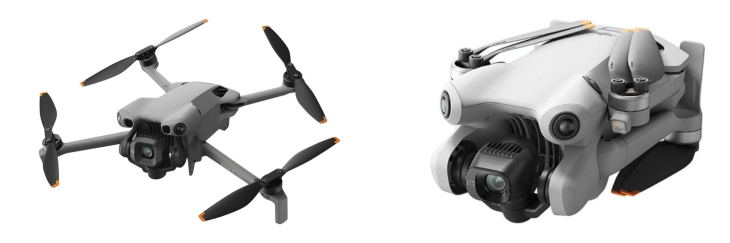
Why Do I Recommend The DJI Mini 5 Pro?
- The DJI Mini 5 Pro comes with a 1-inch CMOS camera sensor to capture cleaner images with better low-light performance and higher dynamic range, while DJI Mini 4 Pro uses a smaller 1/1.3-inch CMOS sensor.
- The DJI Mini 5 Pro features 4K video recording at up to 120 fps for smoother slow-motion footage and greater creative flexibility, while the DJI Mini 4 Pro supports 4K video recording at up to 100 fps.
- The DJI Mini 5 Pro includes forward LiDAR-assisted obstacle sensing to improve collision detection and safer navigation in low-light environments, whereas the DJI Mini 4 Pro relies solely on vision-based obstacle sensing.
- The DJI Mini 5 Pro has up to 42 GB of internal storage to allow extended recording without an immediate memory card, while the DJI Mini 4 Pro comes with only 2 GB of internal storage.
- The DJI Mini 5 Pro supports a maximum flight time of up to 52 minutes with the Intelligent Flight Battery Plus for longer uninterrupted aerial sessions, whereas the DJI Mini 4 Pro reaches up to 45 minutes with the same battery type.
- The DJI Mini 5 Pro supports a higher maximum takeoff altitude of 6000 meters to maintain stable performance in high-altitude locations, while the DJI Mini 4 Pro is limited to a maximum takeoff altitude of 4000 meters.
- The DJI Mini 5 Pro uses the O4 Plus transmission system to provide stronger signal stability and longer effective range in complex environments, while the DJI Mini 4 Pro uses the standard O4 transmission system.
- The DJI Mini 5 Pro features higher wind resistance rated at 12 m/s to maintain steadier flight in windy outdoor conditions, compared to the DJI Mini 4 Pro which is rated at 10.7 m/s wind resistance.
Maybe the DJI Mini 4 Pro price can make you comfortable because it’s a little bit cheaper than the DJI Mini 5 Pro. But you have to compromise all the above-mentioned features. Now the Decision is Yours. I hope it was helpful to choose the right one.
Side By Side Comparison
| Feature | DJI Mini 5 Pro | DJI Mini 4 Pro |
| Effective megapixels | 50 MP | 48 MP |
| Max photo resolution | 8192 × 6144 | 8064 × 6048 |
| Lens aperture | f/1.8 | f/1.7 |
| Lens field of view | 84° | 82.1° |
| Max video resolution | 4K @ 120 fps | 4K @ 100 fps |
| Max FHD slow motion | 1080p @ 240 fps | 1080p @ 200 fps |
| Internal storage | 42 GB | 2 GB |
| Max flight time (standard battery) | 36 min | 34 min |
| Max flight time (Plus battery) | 52 min | 45 min |
| Max flight distance (standard) | 21 km | 18 km |
| Max flight distance (Plus) | 32 km | 25 km |
| Max wind resistance | 12 m/s | 10.7 m/s |
| Max ascent speed | 10 m/s | 5 m/s |
| Max descent speed | 6–8 m/s | 5 m/s |
| Max horizontal speed | 18–19 m/s | 16 m/s |
| Max takeoff altitude | 6000 m | 4000 m |
| Obstacle sensing hardware | Vision + forward LiDAR + IR | Vision + bottom IR |
| Low-light sensing threshold | >1 lux | >15 lux |
| Forward sensing speed limit | ≤15 m/s | ≤12 m/s |
| Standard battery capacity | 2788 mAh | 2590 mAh |
| Plus battery capacity | 4680 mAh | 3850 mAh |
| Recommended charger power | 65 W USB-C | 30 W USB-C |
| Price | Check Mini 5 Pro Price | Check Mini 4 Pro Price |
What Common Both Can Do?
- Sub-250 g class: Both drones are designed to remain within the sub-250 g category, which simplifies registration requirements in many regions. This makes them easier to carry and more accessible for casual and travel use.
- Folding airframe: Each model uses a foldable arm design that significantly reduces storage size. This improves portability and allows the drone to fit easily into small bags or cases.
- 3-axis mechanical gimbal: Both drones rely on a true three-axis mechanical gimbal for stabilization. This ensures smooth footage during movement, wind, and directional changes.
- Vertical shooting (true portrait): Each drone can rotate the camera for native vertical capture. This allows direct creation of content optimized for social media platforms without cropping.
- 4K video recording: Both models support 4K resolution video capture. This provides high detail and flexibility for editing and cropping while maintaining image quality.
- HDR video support: HDR recording is available on both drones. This helps preserve highlight and shadow detail in scenes with challenging lighting conditions.
- D-Cinelike color profile: Both drones include DJI’s flat D-Cinelike profile. This allows greater flexibility in color grading during post-production.
- RAW photo capture: Each model supports RAW photo formats. This enables advanced photo editing with higher dynamic range and detail retention.
- Intelligent Flight Battery support: Both drones use DJI’s Intelligent Flight Battery system. This provides battery health monitoring, safety protections, and predictable power management.
- Intelligent Flight Battery Plus support: Each drone is compatible with higher-capacity Plus batteries where regulations allow. This gives users the option to extend flight time beyond the standard battery.
- USB-C charging: Both models charge via USB-C. This allows convenient charging from power banks, chargers, and multi-port adapters.
- GPS + Galileo positioning: Each drone uses multiple global navigation satellite systems. This improves positioning accuracy, stability, and return-to-home reliability.
- Return-to-Home (RTH): Both drones include automated RTH functionality. This helps safely recover the drone when signal is lost or the battery runs low.
- Precision hover (vision + GNSS): Each model combines satellite positioning with vision sensors for stable hovering. This is important for precise framing and low-speed maneuvers.
- Advanced Pilot Assistance (APAS): Both drones include APAS for obstacle-aware flight. This system assists pilots in navigating complex environments more safely.
- Omnidirectional obstacle sensing: Each drone features multi-directional obstacle detection. This enhances situational awareness and reduces collision risk during automated or manual flight.
- Waypoint flight: Both drones support waypoint missions. This allows repeatable, pre-planned flight paths for consistent shots.
- Cruise Control: Each model includes Cruise Control functionality. This helps maintain constant speed for smooth cinematic movement.
- MasterShots: Both drones feature MasterShots automation. This enables quick capture of complex cinematic sequences with minimal pilot input.
- FocusTrack: Each model supports subject tracking modes within FocusTrack. This allows the drone to follow and keep subjects framed during movement.
- Panorama modes: Both drones include multiple panorama shooting options. These allow wide-angle landscape captures with automatic image stitching.
- QuickShots: Each drone provides QuickShot flight patterns. These preset maneuvers help users capture dynamic shots easily.
- Wind level rating (Mini Pro class): Both drones are rated for similar wind resistance within the Mini Pro category. This ensures stable flight performance in moderate outdoor conditions.
Common Features
| Feature | DJI Mini 5 Pro | DJI Mini 4 Pro |
| Sub-250 g class | Yes | Yes |
| Folding airframe | Yes | Yes |
| 3-axis mechanical gimbal | Yes | Yes |
| Vertical shooting (true portrait) | Yes | Yes |
| 4K video recording | Yes | Yes |
| HDR video support | Yes | Yes |
| D-Cinelike color profile | Yes | Yes |
| RAW photo capture | Yes | Yes |
| Intelligent Flight Battery support | Yes | Yes |
| Intelligent Flight Battery Plus support | Yes | Yes |
| USB-C charging | Yes | Yes |
| GPS + Galileo positioning | Yes | Yes |
| Return-to-Home (RTH) | Yes | Yes |
| Precision hover (vision + GNSS) | Yes | Yes |
| Advanced Pilot Assistance (APAS) | Yes | Yes |
| Omnidirectional obstacle sensing | Yes | Yes |
| Waypoint flight | Yes | Yes |
| Cruise Control | Yes | Yes |
| MasterShots | Yes | Yes |
| FocusTrack | Yes | Yes |
| Panorama modes | Yes | Yes |
| QuickShots | Yes | Yes |
| Wind level rating (Mini Pro class) | Yes | Yes |
| Price | Check Mini 5 Pro Price | Check Mini 4 Pro Price |